
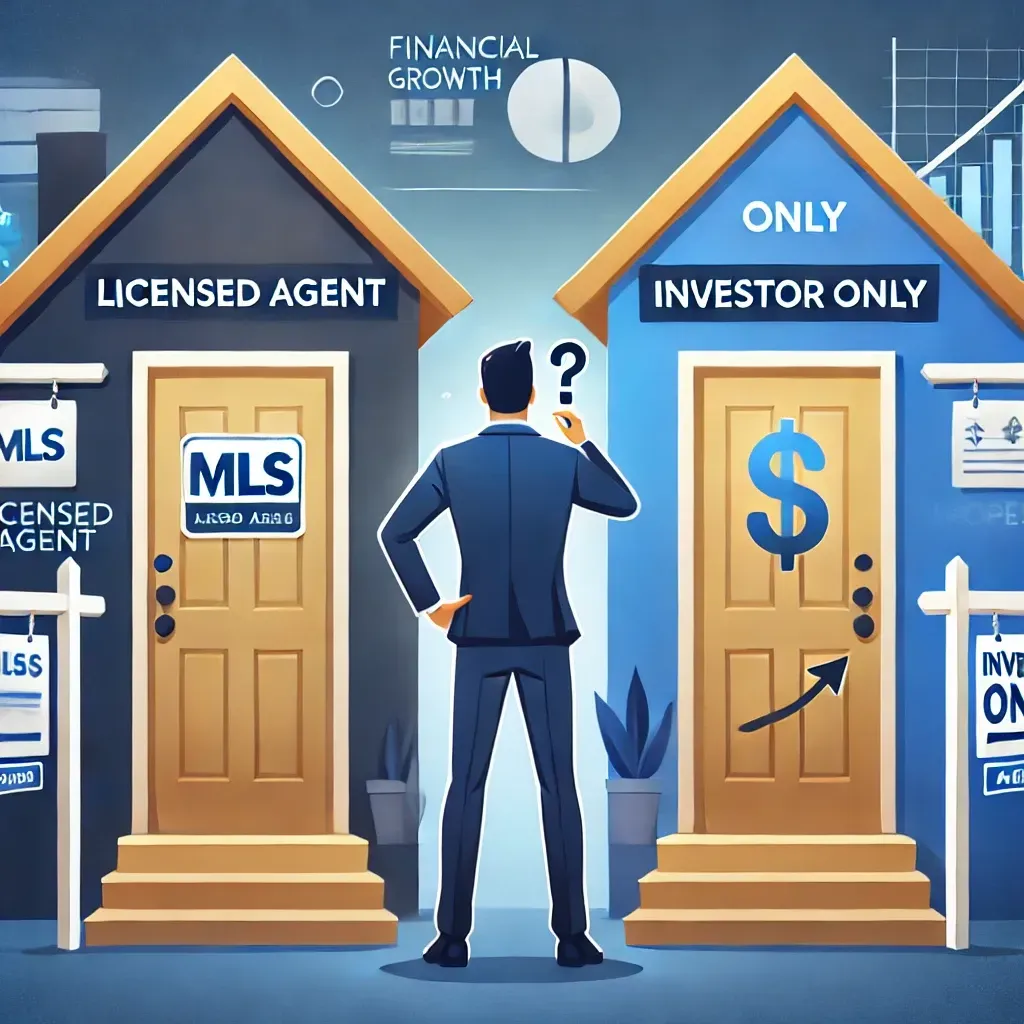
📜 Should Real Estate Investors Get a License? The Pros & Cons of Becoming a Licensed Agent
Should Real Estate Investors Get a License? The Pros & Cons of Becoming a Licensed Agent
Introduction
Many real estate investors wonder: "Should I get my real estate license?" While it's not a requirement to invest in real estate, having a license can provide exclusive access to deals, commission savings, and increased credibility.
But is it worth the time, effort, and cost? Or can you achieve success without it?
In this guide, we’ll break down the benefits, drawbacks, and key factors to consider so you can decide whether a real estate license is the right tool for your investing strategy.
1. The Benefits of Having a Real Estate License as an Investor
A real estate license can be a powerful asset for investors looking to maximize their profits and gain a competitive edge.
🔹 Access to More Deals
✔ MLS Access – Get instant access to off-market and newly listed properties before the public.
✔ Direct Deal Flow – No need to rely on agents to bring you leads.
✔ Inside Market Data – Analyze market trends and pricing directly from the MLS.
🔹 Save (or Earn) on Commissions
✔ No More Paying Full Agent Fees – Save thousands when buying and selling your own properties.
✔ Earn Commissions on Deals – Make extra income when representing yourself or other investors.
✔ Better Negotiation Power – Set your own terms and fees when handling transactions.
🔹 Increased Credibility & Networking
✔ Sellers Take You More Seriously – A license can add legitimacy when making offers.
✔ More Investor Connections – Build stronger relationships with agents, lenders, and wholesalers.
✔ Opportunity for Dual Careers – You can flip houses, wholesale, and still make money as an agent.
Pro Tip: If you plan to do multiple transactions per year, having a license can significantly reduce costs and increase your profit margins.
2. The Downsides of Getting a Real Estate License
While a license has its benefits, it’s not for everyone—there are costs, obligations, and potential conflicts to consider.
🔹 Licensing & Education Costs
✔ Pre-licensing courses: $300–$1,000
✔ State exam & licensing fees: $100–$500
✔ Ongoing renewal & MLS fees: $1,000+ per year
🔹 Additional Responsibilities & Regulations
✔ Legal & Ethical Boundaries – Agents must disclose their status in transactions.
✔ Time Commitment – Studying for the exam and fulfilling continuing education takes time.
✔ Brokerage Affiliation – Most states require agents to work under a brokerage, meaning possible commission splits.
🔹 Potential Conflict of Interest
✔ Some sellers prefer working with direct buyers, not agents.
✔ Wholesaling may become more complex with disclosure rules and licensing laws.
✔ You may be required to act in a fiduciary capacity, affecting negotiation tactics.
Pro Tip: If you prefer hands-off investing, managing properties, or wholesaling, a real estate license may not be necessary.
3. Who Should Consider Getting a Real Estate License?
Not every investor needs a license, but for some, it can be a game-changer.
🔹 A License May Be Right for You If:
✔ You flip houses or buy multiple properties per year and want to save on commissions.
✔ You enjoy negotiating deals and working with buyers/sellers.
✔ You want direct access to the MLS and inside market data.
✔ You’re interested in a dual career as an agent and investor.
✔ You plan to wholesale properties legally in states that require a license.
🔹 A License May NOT Be Necessary If:
✔ You prefer passive investing (rental properties, syndications, BRRRR).
✔ You work with a strong network of agents who find you deals.
✔ You don’t want to handle contracts and paperwork.
✔ You prefer to focus on wholesaling, property management, or financing.
Pro Tip: If your investment strategy involves more than 5 transactions per year, getting a license can save you thousands in commissions.
4. How to Get Your Real Estate License (Step-by-Step)
If you decide a real estate license aligns with your goals, here’s how to get started.
🔹 Step 1: Complete Pre-Licensing Education
✔ Check your state’s real estate licensing requirements.
✔ Enroll in an approved real estate course (online or in-person).
✔ Pass the required coursework & exams.
🔹 Step 2: Pass the Real Estate Licensing Exam
✔ Take the state-administered real estate exam.
✔ Apply for your official real estate license.
🔹 Step 3: Choose a Brokerage & Activate Your License
✔ Many states require agents to work under a licensed broker.
✔ Pay MLS and National Association of Realtors (NAR) fees if needed.
✔ Start accessing off-market deals and networking with agents.
Pro Tip: Many investors get a license, then go inactive, meaning they don’t have to work under a broker but can still benefit from licensing perks.
5. Alternative Ways to Access Deals Without a License
If getting a real estate license isn’t right for you, there are other ways to find and secure off-market deals.
✔ Network with Licensed Agents – Build relationships with agents who specialize in investment properties.
✔ Work with Wholesalers – Wholesalers find off-market deals and assign contracts to investors.
✔ Direct-to-Seller Marketing – Use cold calling, mail campaigns, and online ads to connect with motivated sellers.
✔ Join Investor Meetups – Many experienced investors share deal opportunities.
✔ Partner with a Licensed Investor – If you don’t want a license, team up with someone who has one.
Pro Tip: You don’t need a license to find great deals—you need the right strategy and network.
Conclusion: Is a Real Estate License Right for You?
A real estate license can be an incredible tool for investors, but it’s not a requirement for success.
✔ If you want to save on commissions and access MLS deals, a license can be valuable.
✔ If you prefer passive investing or wholesaling, it may not be worth the effort.
✔ Either way, building a strong network and mastering deal-finding strategies is key.
💡 Want to learn how to find deals with or without a license? Join The Profit Playbook today for expert guidance, mentorship, and exclusive investment strategies!


